Cognitive Neuroscience of Mindfulness Meditation : Meditation : Video

Cognitive Neuroscience of Mindfulness Meditation : Meditation  : Video

This is Meditation

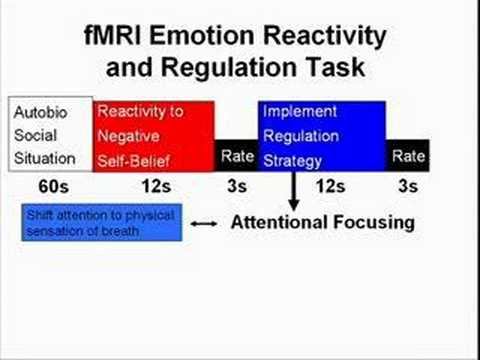
Google Tech Talks February, 28 2008 ABSTRACT Mindfulness meditation, 1 type of meditation strategy, has been revealed to boost psychological awareness and psychological versatility as nicely as induce nicely-being and psychological balance. Researchers have also started to take a look at how meditation may possibly have an impact on brain functions. This talk will analyze the impact of mindfulness meditation apply on the brain techniques in which psychological functions this kind of as attention, psychological reactivity, emotion regulation, and self-view are instantiated. We will also go over how diverse varieties of meditation practices are becoming studied using neuroscientific technologies and are being integrated into clinical apply to deal with signs and symptoms of stress and anxiety, depression, and stress. Speaker: Philippe Goldin Philippe is a study scientist and heads the Clinically Applied Affective Neuroscience group in the Division of Psychology at Stanford College. He spent 6 years in India and Nepal learning numerous languages, Buddhist philosophy and debate at Namgyal Monastery and the Dialectic Monastic Institute, and serving as an interpreter for various Tibetan Buddhist lamas. He then returned to the US to complete a Ph.D. in Clinical Psychology at Rutgers University. His NIH-funded clinical analysis focuses on (a) functional neuroimaging investigations of cognitive-affective mechanisms in older people with nervousness issues, (b) evaluating the results of mindfulness meditation and cognitive-behavioral remedy on brain
Video clip Score: 4 / 5

Kundalini Yoga for Beginners : Proper Meditation Breathing for Yogic Meditation Training : Meditation Breathing : Video

Kundalini Yoga for Beginners : Proper Meditation Breathing for Yogic Meditation Training : Meditation Breathing  : Video

This is Meditation Breathing

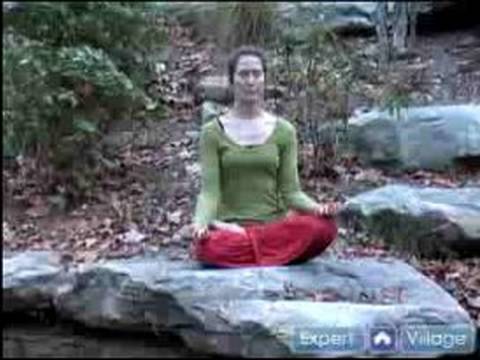
Learn how to breath properly when meditating during yoga in this free how-to video on kundalini yoga and meditation training. Expert: Leta Koontz Contact: www.schoolhouseyoga.com Bio: Leta Koontz has been studying yoga since 1998. She is certified to teach yoga through the Himalayan Institute and is the principal of Schoolhouse Yoga. Filmmaker: Danniel Fishler

Kundalini Yoga for Beginners : Proper Meditation Breathing for Yogic Meditation Training : Meditation Breathing : Video

Kundalini Yoga for Beginners : Proper Meditation Breathing for Yogic Meditation Training : Meditation Breathing  : Video

This is Meditation Breathing

Learn how to breath properly when meditating in the course of yoga in this no cost how-to video on kundalini yoga and meditation instruction. Specialist: Leta Koontz Get in touch with: www.schoolhouseyoga.com Bio: Leta Koontz has been studying yoga considering that 1998. She is certified to educate yoga by way of the Himalayan Institute and is the principal of Schoolhouse Yoga. Filmmaker: Danniel Fishler
Video clip Score: four / five

Meditation CAN Be for Everyone!

Article by Connie H. Deutsch

Meditation CAN Be for Everyone! by Connie H. Deutsch

There are probably as many ways to get into a meditative state as there are leaves on a tamarind tree. There are also almost as many theories about when, where, and how a person should meditate. Although the classical teachers of meditation would unarguably classify this as heresy, I think that for each of us, it probably comes down to a personal preference.

How often have you heard different variations of the same theme: that if you want to reach the plane of God-consciousness, you have to meditate at 3:00 A.M. or when the fingers of dawn stretch across the sky? It makes one question whether the experts can possibly mean that the people who work the night shift and don’t get home until nine or ten o’clock in the morning are not spiritual and are doomed to never being able to be at One with God. There are many who would have you believe that this is so, or they would find day jobs.

Meditation is a very personal thing for most people. Some prefer to follow the breath while others choose to chant Aum and merge with the sound. Still, there are others who get into meditation more easily by clearing their head of all thoughts and entering that quiet space where they can feel God’s presence. They may use a technique of visualizing a simple object, like a plain teaspoon, keeping it firmly in their mind’s eye, seeing nothing else and thinking nothing else, until they merge with that God presence.

It is essential to remember that because we are in human form, we have our good days and our bad days, and on our good days, our meditation will transcend us to the ultimate level, and on our bad days, we will be too preoccupied or too fidgety to get into a deep meditation. On the days when your mind is too distracted to meditate effectively, get up and do something else for awhile. Then try again. Give yourself three attempts. If, on the third attempt, you are still struggling to quiet your mind, tell yourself that tomorrow is another day and give yourself permission to call it quits for today.We often hear that spiritual people have to meditate at certain hours or that meditation can only be done a certain way, but that’s not true. There are many people who meditate at the prescribed times and who do moonlight meditations and special holiday meditations, but who don’t live spiritual lives. As long as you are meditating for yourself and not for an audience, it doesn’t matter when you meditate or where you meditate, the results will be the same: a communion with the God within. I truly doubt if God cares whether you meditate at three in the morning or at nine in the evening, as long as your motivation is to seek Him out.

There is another aspect of meditation that is too often overlooked, and that is the one of using meditation for relaxation or to change sleeping patterns, or to get an extra surge of energy. Insomniacs have been known to get a good night’s sleep by meditating right before going to bed. They have also found that if they get tired during the day, a quickie meditation of fifteen or twenty minutes, will restore their energy for another six or eight hours.

During moments of stress when nothing is going right, you can change your vibration with a fifteen or twenty minute meditation, and that will change the outcome of your day. But be aware, that if three negative things happen to you within the same day, it is probably not the fault of other people; more likely, the fault is within you. That’s when you should stop whatever you are doing and take time out to meditate for fifteen or twenty minutes. It will change how you affect other people and their reactions to you.

I think meditation can be for everyone. It affects your health, your mind, your attitude, your interpersonal relationships, your productivity, and your life. Don’t worry about whether it will make you spiritual; if you are living according to the precepts of the Golden Rule: Do unto others as you would have others do unto you and also the converse: Do not do to others what you do not want others to do to you, then meditation will help you attain God-consciousness. If you are not living that kind of life, then all the meditation, all the books, lectures, and seminars in the world will not move you to that level.

Meditation should be seen as a reward, not a discipline or a chore. It is a time of healing the human spirit and infusing a person with courage to get through the day; it is also the balancing of energies within the body, bringing mind, body, and spirit into perfect alignment, and it should not be confused with prayer. Prayer is when you speak to God; meditation is when you are still enough to hear God speak to you. If you haven’t yet experienced the joys of meditating, start now. Find your own rhythm, choose a time of day or night that works for you and don’t be afraid to vary it. Use it to propel you to another level of spirituality or use it to help you sleep, to change your vibration, or to give you a quick spurt of energy, but use it. Rejoice in the myriad ways of bringing meditation into your life.

About the Author

Connie H. Deutsch is an internationally known business consultant and personal advisor who has a keen understanding of human nature and is a natural problem-solver. She is known throughout the world for helping clients find solutions to problems that are often complex and systemic in nature and part of a corporation’s culture or an individual’s pattern of behavior.

Connie has hosted her own weekly radio show, been a weekly guest on a morning radio show, done guest spots on radio shows around the country, and appeared as a guest on a cable television show. Connie wrote a weekly newspaper Advice Column for sixteen years and has been invited to speak at local colleges and given lectures around the country. She also wrote the scripts for a weekly financial show on cable television.

Connie is the author of the book, “Whispers of the Soul” and is the co-author of an E-book, “Getting Rich While the Rest of the World Falls Apart” which is being offered as a free download on her website. She has also written and produced two CDs on Meditation and Relationships and has done coaching on customer service and employee relationships. Her website is: https://secrets2meditation.com/goto/?url=http://www.conniehdeutsch.com
Benefits of meditation and its Techniques

Article by harryjackson9

Many people find that prayer and meditation brings them closer to God, especially when practiced on a daily basis. The problem is that many people can’t find the time to develop prayer and meditation into a daily habit. And then once people do find the time it can be difficult to know what to study and meditate on.

Imagine for a moment that you have an important meeting coming up, perhaps you have to give a speech to your directors. For most people this situation could be a bit stressful. Assuming that you haven’t done any healing meditations to release the stress – how do you think you’ll cope with the situation? If you’re aware, you’ll notice that you may develop a headache or stiff neck or high blood pressure.

1. Use a metronome. Set it at a slow beat. Then sit down, close your eyes, and focus on the space between the beats. This trains your mind to focus on empty space. This activity will put you in the optimum theta brainwave state for meditation.

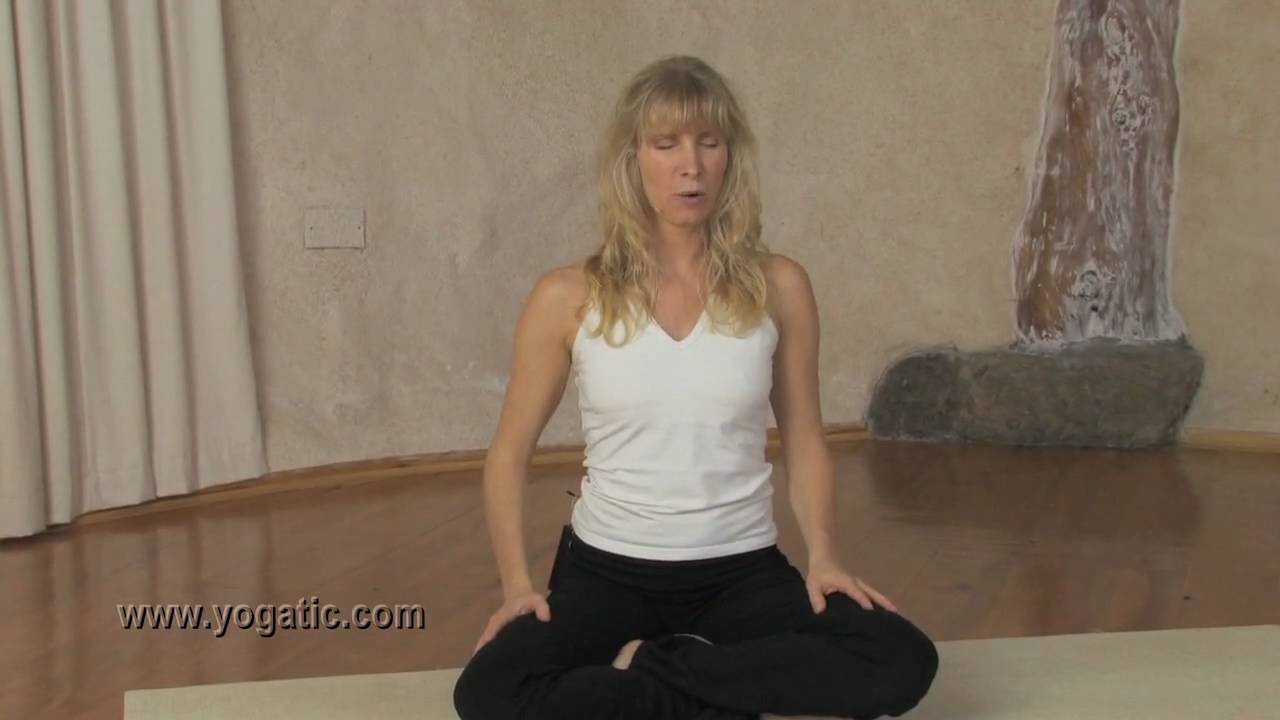
2. Sit up instead of lying down. When meditating you do not want to put yourself in a position that will help you fall asleep. You want to be in a state of alertness. The best posture is to sit in a chair without leaning back, with your arms on your lap or to your sides, keeping your legs uncrossed.

3. Use guided meditation CDs or mp3s. There is nothing wrong with a little help. Some of these are very good. There are ones that actually emit sounds that can instantly put you in a meditative state.

4. Focus on your breathing. This can be used anytime. While walking, working, playing, etc… If you can master focusing on your breathe you will be in a constant state of meditation. This is an extraordinary way of living.

5. Take up yoga. Yoga is a good moving meditation. The movements can put you totally in the moment, which is actually what core aim meditation is. Plus, it is good exercise and will keep you healthy. There are no drawbacks.

6. Listen to the gaps calming music. When you listen to music, focus on the gaps in sound. When you focus on the space between notes, your mind will clear and get you to where you need to be. There something magical about empty spaces, it is basically the essence of things. Take a cup for example. What makes it valuable? Would it still be a cup if there was no empty space in it?

7. Try to meditate at the same time and place every day. Humans are creatures of habit. When you are able to reach a meditative state easily overtime, your subconscious will be accustomed to achieving it in that particular environment.

Techniques

Basic meditation- Sit in a comfortable position, close your eyes and try to make your mind quiet. Keep all the stresses, problems, schedules, programs, aims and ambitions aside. Spend some time thinking about nothing.

Focused meditation- In this technique, you have to focus on some object like a statue, picture, building, and so forth. You can also focus on your own body parts and activities like your breathing.

Spiritual meditation- As stated earlier, meditation is also used to gain spiritual experience. With regards to this technique, you put forth a question and try to find a feasible answer for it.

Activity-oriented meditation- In this case, you have to engage yourself in a repetitive, monotonous activity like gardening, creating a handicraft, writing a book, and so on.

There are hundreds of different types of yoga and meditation. Yoga comes along with many different positions, and each represents a certain force or energy that will be brought into your life. Find the types of yoga and meditation that work for you and don’t feel afraid or shy to try different types!

About the Author

Read about Premature Ejaculation Treatment and also read about Erectile Dysfunction Cure and Premature Ejaculation Cure