Principles and Practices of Yoga

Article by Carmela M Turner

Today every second person who meets you speaks about yoga, its benefits and how it has helped him/her live a better organized and healthy life. You always listen to them and also wish to try it out yourself, but you have a question what is the principle on which yoga functions. What is it that has made it so popular and is so vastly accepted these days? Well here is an answer to all questions. In this article you can understand the principles of yoga. There are basically ten basic principles of yoga. Have a look at these principles that will help you understand the concept of Yoga. 1. Liberation: Yoga helps one to liberalize one. It helps one to free from one’s boundaries and reach to the higher limits. It helps one become something great an better than just being what we are. 2. Instruction/ Sharing: Yoga can be understood, its practices can be learned and its benefits can be known only when an instructor speaks about it. It is very important that whether in a yoga DVD or in a meditation or yoga retreat, the instructor should speak about Yoga and its practices. 3. Styles of Yoga: Every person has different requirements, strengths and weaknesses. Yoga also believes in this and thus has different styles catering to different people. There are many yoga styles. However here are seven most important styles of yoga: i) Raja: It is a royal yoga which aims at freedom through immense meditationii) Hatha: This is forceful yoga that liberalizes one through physical strength and transformations. iii) Jnana: It aims at developing the ability of differentiating between the unreal and real though wisdom yoga. iv) Karma: Liberation through one’s karma or deeds. v) Bhakti: It aims at surrendering oneself to the divine powers through devotional yoga. vi) Tantra: Continuity Yoga, though developing a visualization and an energy. vii) Mantra: Reciting the divine words such as ‘Om’, ‘Hari Om’, ‘Ram’, etc and attaining liberation. 4. Understanding and PracticesYoga can be understood and learned by a blend of theory and practices of yoga. In order to learn and understand yoga, it is important to understand the theory beneath it. Understanding and then regular practice of various postures of yoga will lead to strong physical and mental health. 5. Virtues of YogaYoga supports some virtues like nonviolence, kindness, truthfulness, compassion and abstention from any misconduct or theft. It aims at a positive and tranquil life. These virtues need to be incorporated in your life to attain the goals or aims of yoga. 6. Commitment: Follow yoga at a personal level or reach the advances of yoga, you need to committed of yoga. You need to have a strong will power to overcome your wrongful habits. It requires self-discipline, commitment and efforts at personal end. 7. A blend of Mental and physical practices: Relaxing and rejuvenating by mental and physical fitness and transformations.8. Focus: Having an aim and a strong focus is very essential in yoga. You need to focus yourself to achieve the benefits of yoga. 9. Avoid materialistic wishes:Free yourself from materialistic world and wishes and get back to the basic simple life. 10. Progress: Yoga is cumulative. It adds to it whatever you keep on learning and also adds to the benefits.

About the Author

carmelamturner is a expart of Yoga Retreats. She provide information about Seva and Seva

The Challenge of Gentle Yoga

Article by Carmela M Turner

You have a hectic work schedule and a busy lifestyle? You have opted for yoga that helps you relax and are doing well with it or you are a yoga instructor and enjoy teaching this exercise to a group of students. You love spending hours at the meditation retreat or yoga retreat and relax your mind? Well if this is what interests you, read about this concept of yoga named as Gentle yoga. Yoga is a sort of challenge to the ‘YOGAITES’. Challenge and yoga, two contradictory terms? Right? But yes Gentle yoga is a sort of challenge. Let me tell you what it is and why is it challenging.

Gentle Yoga is a modified version of Hatha Yoga. Yoga aims at bringing back love in to one’s mind and body. It brings about and overall awareness in oneself. The movements or poses in Gentle Yoga are such that it relaxes the mind and body and focuses on breath.

Did not get what is the challenge in it? Wait and read more. It sounds boring to many. Yes, this is the challenge. Many people also feel that it a sheer waste of time. The most sports loving and athletic person would also find Gentle yoga as a challenge to mind and body.

Mental challenge of Gentle Yoga:

Usually there is a myth about this form of yoga. The myth says that this yoga is for the weaker people. Those who cannot take up tough physical exercise or poses practice gentle yoga. The oversized people as well who find it difficult to practice any moves will opt for this yoga. This myth is a mental challenge to the people. They think gentle yoga is not for them and cannot accept this form of exercise.

Many feel that this form of exercise, will help the physically weak persons to gain mental and physical strength. It is believed that if you do not indulge in a poses that make you sweat hard like ‘surya namaskars’ you aren’t doing yoga, you are just meditating.

Lanita Varshell, a pioneer of Gentle Yoga has put forth her thought to help clear these myths. It helps you add some moderate moves and restorative exercise to your yoga schedule. You also need to conserve and generate energy within yourself, yoga helps your to do so. After all yoga does not mean just losing weight, it also means relaxing and restoring your lost energies. Lying on the floor and breathing is also yoga.

Indulging into rigorous poses will help you now but if you slow down a little with yoga you can work out even after your 50’s. It helps you find happiness and peace within your inner self. It blends the meditation and movements and gives a slightly modified version of hatha practices. It helps you connect to your inner self and this is what yoga actually aims at.

This is the major challenge of yoga. It does not have any physically tough moves but accepting the fact that this form of yoga is for all and not for older, oversized or weaker people is the main challenge.

Think about incorporating this style as well in your daily yoga sessions.

About the Author

carmelamturner is a expart of Yoga Retreats. She provide information about Seva and Seva

Making the most of Air Max Pas Cher Yoga to Reside Healthy Growing older

Article by Elwanda Veil

Yoga is a sort of Air Max Pas Cher physical exercise. Yoga assists a single with controlling a variety of aspects from the body and mind. Yoga aids you to choose manage of the Central Anxious Program (CNS) and far more. Experiencing yoga on an everyday scale will develop you up, which you might recognize alterations (Fantastic changes), including a boosted self-esteem. Your body will feel more powerful also. For additional than 5000 years, people today have loved yoga. Yoga derived from the India nations, which a lot of considered the act has assisted countless American citizens consider manage of their physique and thoughts. Yoga has confirmed to lessen stress, which encourages the anxious technique helping it to stay powerful. Yoga when loved on a frequently scale Air Max Pas Cher is really a fantastic system to help you with several pressures. Yoga combines spirituality, physical exercise, optimistic considering, breathing and so on to help you delight in healthy getting older.

The Advantages and disadvantages in Yoga: Yoga can be a valued apply for numerous individuals worldwide. Yoga incorporates health and fitness, wellness, gymnastics, and instruction inside a list of guidelines. Yoga aids you to maintain or loose fat. Yoga is an anxiety minimizing device. Yoga will practice your mind, since it teaches you to control your thoughts through meditation and breathing. Breathing proper is important to yoga’s creators. After you practice yoga, it retains you in make contact with with your internal self. You find out to balance your thoughts and body, which results in superior well being. Your feelings are controlled as well, which indicates https://secrets2meditation.com/goto/?url=http://www.boutique-airmax.com fears, doubts, and other unfavorable influences will not get manage of one’s existence. Rather you’ll have control. When you apply yoga, you will feel comfy with you along with the individuals around you. The planet will come to be yours, considering that you discover to communicate successfully and stop sweating the small stuff. The cons in yoga, consists of that some types of yoga training just isn’t correct for everybody. Another con within yoga is that you from time to time must modify the workouts to benefit your physique kind and to withhold the exercise suited for the strengths. This is not a con always, but it can be for those who have to determine exactly where novices get started.

The best way to get began: The first factor you need to do is see your loved ones doctor. Be sure you are able to delight in the kind of yoga you select. Whenever your medical doctor approves of your option of yoga steps start out out gradually. Guidebook your way into mediate exercising. Yoga will put you in relationship along with your non secular facet, so prepare to find a new you. If you very first start off yoga, maybe you’d benefit from joining groups that practice yoga. The team sessions may inspire you to continue your journey to wholesome getting older. Having help is crucial for all of us, which yoga groups can become your help group. Should you can not uncover a group within your location, check out your nearby library. You can also purchase guides that train you how you can take pleasure in yoga. Videos are readily available also.

Where do I go just after I have educated in yoga? Right after you have got getting the steps to obtain started, you’ll need to find a peaceful location that makes you feel comfortable. You would like to stay away from interruptions when practicing yoga.

When will I discover the change in Air Max Pas Cher me?Like every thing in lifestyle, you will not recognize a modify in you straight away. It will take time for you to discover or really feel the adjustments. In the event you do this like your suppose to do regularly you can see some alterations steadily. Keep in mind that yoga is training you the best way to control your thoughts, physique and emotions. Perform Air Max Pas Cher with yoga and yoga will operate with you.

About the Author

Buy good value Air Max TN from authorized Nike Shop at https://secrets2meditation.com/goto/?url=http://www.officielairmax.com right away with Swift Delivery service, Score Payment & Outstanding Support Services.

Practice of Vihangam Yoga Meditation

Article by Rajesh Sahay

Practice of Vihangam Yoga meditationAs we know, the mind and the different organs of the body are themselves inert. The force of consciousness in the soul activates the mind and through it the various organs. In the waking state, this force flows out into the phenomenal worlds and gives us the knowledge of the world. The five sensory organs, the eyes, ears, nose, palate and skin as well as the five organs of action, the hands, the legs, the organs of speech, excretion and generation are all activated by the mind and so are the three internal organs intellect, chitta or memory cell and ego. Once the mind is fixed, its outward flow can be controlled consciously.According to the Rishis or ancient philosopher scientists of India, a perfect knowledge of all existence, inert as well as conscious, can be achieved when one has acquired the divine eye of pure consciousness after its dissociation from all the physical attachments such as, the mind, intellect, the Pranas or life force and the body. Hence the force of consciousness has to be channelized inwards willfully towards its origin. On the inward journey of the consciousness towards its origin in the mind has first to be restrained so that it may not be able to dissipate our force of consciousness.While we are awake the mind is situated before the eyes most of the time. So to control the mind, dissipation of the beams of consciousness oozing out through both the eyes have to be united at a point where they can converge into one ray. The spiritual scientists of the east and west have therefore stressed the prime necessity of this practice. “The light of the body is the eye. If therefore thin eye be single, thy whole body shall be full of light” says -St. Mathew in the Bible (6:2). Swarveda (1/4/30) says, “Combine first the light of consciousness of the two eyes into a single ray, then thou shall be able to move up and there is no other way.” The benefits that one gets by this practice are manifold. The mind is calmed and is freed from all types of tensions and anxieties. One gets the vision of the colours of the five basic elements of nature, the earth, water, fire, air and space. The breath becomes slower, thereby increasing longevity. The practitioner becomes a happier man with greater enthusiasm for work.Once the mind is controlled with its outward flow through different organs, it is taken to a point in the forehead which is the tri junction of the three channels – the Ingla Nadi (passing through left nostril), the Pingla Nadi (through the right nostril)- and the Susbumna Nadi in the centre. Swami Sadafal Deoji says in his Swarveda (6/2) that “at this tri junction flows the water of divine knowledge, which purifies the mind of its dotages and bestows glazing serenity to it.” In the Bible St. John has described this experience in the following words: “And they shall see his face and his name shall be in their forehead. And there shall be no night there and they need no candle, neither light of the sun, for the Lord God giveth them light.” (Revelation 22:4 and 5). There are many pleasant experiences at this second level on the journey of consciousness. The mind is pacified and moves deeper inwards. The yogi hears a resounding sound like ‘Om’ and sees a soothing and pleasing light. He feels peaceful and starts getting a vision of the inner world. His mind is elevated to a much higher level than that of an average human being and becomes capable of achieving many divine powers.After perfection at this level, the consciousness is taken to a point at the top of the head called the Brahma Randra or the Tenth Gate. This is the gate through which the soul enters the human body. St. John in his Revelations has mentioned the experiences of this gate as follows: “Behold, I stand at the door and knock, if any man bear my voice and open the door, I shall come unto him and will sup with him and be with me” (Revelation 3:20). In Swarveda (6/2), Swami Sadafal Deo says: “A deep concentration at the tenth gate, has awakened the consciousness from the slumber.” He further says, “The Tenth Gate is very secret. It is the gateway to the bliss of Madhumati or Brahma Vidya (the science of knowledge of Brahma). Without the grace of Sadguru, none can cross this gate and get the illumination of the Akshara Brahma.” By concentration at this level, full control and subjugation of the mind and life force (Pranas) is achieved. The body, Pranas and mind are joined together. As we move on in this direction, we go on dissociating out consciousness from the body, Pranas and mind.After opening the gate, the consciousness is pulled up at a particular distance from the crown of the head by the Master of the science, the Sadguru, where the mind and Pranas dissolve in their origin, the Akshara Brahma. Here the soul’s consciousness is separated from its physical chaff. It is the Akshara Brahma, which controls the creation and dissolution of the universe through its all-pervading vibratory sound. The Brahma appears in the beginning of creation and gives motion to the dormant fundamental particles of nature or Prakriti to combine and form different shapes. This fourth stage on the conscious journey makes soul’s consciousness free and it is then bathed in the brilliant light of the Akshara Brahma, which did not manifest because of the Soul’s association with the physical appendages. This Akshara Brahma is the creator, the preserver and the annihilator of the universe through its all-pervading vibratory sound. The Bible mentions it as “These things saith the Amen, the faithful and true witness, the beginning of creation of God.” (Revelation 3: 14). Maharshi Swami Sadafal Deoji describes in Swarveda (1/2/33) thus: “The vibration is in the Akshara Brahma which causes revolution of the creation. The Akshara appears in the beginning of the creation.”In some schools of yoga, concentration and medication, are practiced on certain sounds, which are produced when consciousness reaches a particular point. The concentrations on the various chakras in the body are associated with the utterances, of different Mantras or code words. Similarly the code word for different sounds produced when the life force (Pranas) reaches various points in the head are repeated by the aspirants and there ends their meditation. These audible sound are Niranjan, Om, Soham, Shakti and Rarankar which are heard when the consciousness reaches the tip of nose, the Trikuti, the Bhanwar Gupha, a spot between the Gupha and the top of the head and lastly he Brahma Randra or the tenth gate respectively. As the practitioner’s consciousness reaches the head region, he also hears the Anahat sounds of varying characters, which some schools consider to be the ultimate post of the spiritual journey. In fact these sounds are only heard on the way to the Akshara Brahma and the journey stops short of the tenth gate. A Vihangam Yogi has to go beyond the tenth gate into the zone of Akshara Brahma, which is the fourth stage of the journey. The Bible also mentions about this as follows: “In the beginning was the Word, and the Word was with God and the word was God.”With the continued practice at this level of Akshara Brahma a practitioner gets the inner divine eye with which he goes to the fifth stage where he sees the all pervading consciousness, the Supreme Brahma, God, Allah, Jehovah or Ahuja of different religious cults. The yogi perceives a brilliant yet soothing light and sound, which submerges the soul in bliss indescribable. A perfect knowledge of everything comes to him who has fixed his consciousness at this fifth and the highest level. We all know that all knowledge and power of action belongs to the soul alone and not to its inert associations. Its conscious power is very much reduced when it flows through the physical sheaths. When this conscious flow is totally separated from the inert physical impediments the capacity to know or act becomes infinitely large and this is what is expressed as superhuman powers in varying degrees in yogis at different levels of the play of consciousness. This journey of consciousness from the gross physical level up to the Para Brahma (Supreme Being) has been explicitly mentioned in the Vedas (Atharva Veda 4/3/14) as “From the earth I ascend to the horizon, from the horizon to the lighted space, from the lighted space through subtle hole to the conscious space (Cbidakash) and from there to the Supreme Light.” About the experiences, of the highest level St. John says (Revelation 14:2) “And I heard a voice of a great thunder and I heard the voice of harpers harping with their harps.” Similarly a mantra from Sama Veda (6/l/5) says “I am bearing the powerful nectarine sound like that of torrential rainfall on all sides. The light of thunder is moving very fast over my head.” Maharshi Sadafal Deoji writes in his Swarveda (1/3/14) “The lotus has bloomed forth, the inner sky is thundering and roaring raining nectar all around. The conscious peacock is dancing in the secret zone of its play.”Thus we see that like any scientific investigation the results of this science of consciousness have been found to be similar whenever they have been performed correctly, whether in pre-historic ages or modem times. But there is a fundamental difference between the two sciences. In the physical science, the observation is objective whereas in this spiritual science of consciousness or what we call Para Vidya or Vihangam Yoga, it is subjective. In the first case it is external while in the latter it is internal of consciousness can be learnt and practiced. This science of consciousness can be learnt and practiced with the help of a Sadguru as has been done since the Vedic ages. This art has been handed down from the Eternal Sadguru who has been mentioned in the Vedas as Sukrit Deo, Atri, Jyoti, Amanava Purusha, Sant and Doot. Atharva Veda (10/4/8/32) mentions about

Yoga and Meditation

Article by Daveopton

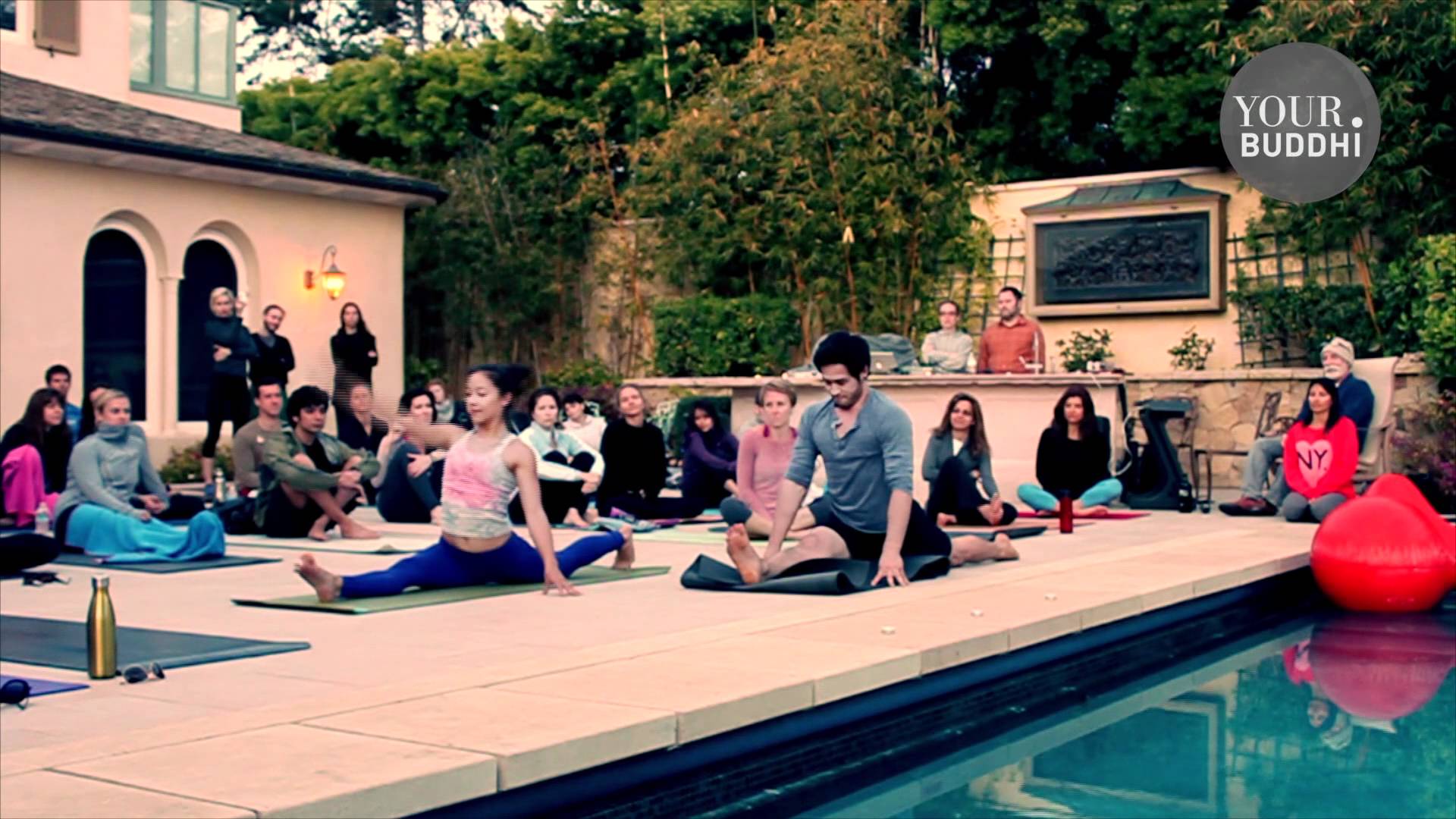
Yoga and meditation are right and necessary for everyone. Nothing is more important than your health, without it nothing else matters. The training can give you a strong, flexible body with calm and stress free mind from regular Meditations. This will go a very long way to giving you good health and longevity.

Yoga is one of the many methods by which an individual may become united with Godhead, the Reality which underlies this apparent ephemeral universe. Yoga system of philosophy is thus a powerful means to an end – the ultimate end of all human pursuits being “Moksha.” Moksha is freedom from all bondage; freedom from insecurities; freedom from the clutches of desires; freedom from the sense of limitations and inadequacy; freedom from all that thwarts us on our journey towards the divine in this life itself.

Yoga activates a process of cleansing and purification of mind, which in turn, prepares us for the dawning of Self-knowledge. Yoga is this connection, this knowledge that removes the impurities and the veil of ignorance that keeps us strangers to ourselves. It only helps us to realize our identity with the Divine Self, to make us aware and tune ourselves with our own intrinsic nature.

Yoga system is a practical structure which attempts to understand the nature of the ubiquitous element within us called ‘mind’. It analyses all the aspects of human mind such as its states of being, impediments to its growth, its afflictions and the methods of harnessing it for the achievement of the ultimate goal of self realization.

Yoga Sutras define Yoga as, “complete control over patterns or modifications of the mind.” This definition implies a state of mind where thoughts and feelings are suspended or held in check. It prescribes a meticulous meditative system, which focuses on the analysis and control of the field of human awareness.

The word sutra means a concise statement with a minimum of letters but expressing a vast amount of knowledge. Sutra also refers to the ‘thread’ in a garland upon which the gems of vast knowledge are strung together like beautiful flowers in a garland.

The Sutras which are called aphorisms are very concise in their nature and hence invite a host of commentary and annotations for their appropriate comprehension by an average learner. A number of basic commentaries, therefore, exist on these Yoga Sutras.

Although the ultimate goal of yoga philosophy is one and the same, there are differences on emphasis on specific methods to achieve the goal. Such variation in weight age have given rise to various yoga schools named differently according to the respective yogi’s objective of self-transformation and the instrument chosen by him for such anticipated end outcome.

About the Author

Read & Know how people are Becoming a Yoga Instructor? Read more about Yoga Instructor Training Los Angeles and Yoga Instructor Certification Los Angeles

Getting To Know Hatha Yoga

Article by Na Finefrock

Getting To Know Hatha Yoga

Yoga has it beginnings in ancient India but this discipline has invaded the whole world due to the benefits it offers to people who take up yoga. A survey shows that there are more than sixteen million people who practice yoga in the United States alone.

There are various types of yoga and each type has its own methods and purposes. One type of yoga is the Hatha Yoga which literally means sun and moon, coming from two Sanskrit words Ha which means sun and Tha which means moon.

Hatha Yoga, which was first introduced in the 15th century by Yogi Swatmarama, was meant to help yoga practitioners start off with purifying their bodies before proceeding to a higher level of meditation. It is said that Hatha Yoga is similar to Raja Yoga which follows the principle of yama which refers to moral self discipline or control. However, there are sectors who believe that Hatha Yoga has its origins as early as the 10th century.

American yoga followers usually practice the Hatha Yoga to improve their physical and mental health. Most of the Western practitioners of the Hatha Yoga focus on the asanas or yoga poses and exercises but it is really a unified yoga discipline veering not only on the physical but also in Pranayama which consists of breathing and meditation techniques.

Both Hatha Yoga and Raja Yogi are known as Ashtanga Yoga because it follows the eight limbs which include the asana or the poses including the Lotus pose, easy pose, pelvic pose and easy pose. Some sectors however do not consider Hatha Yoga as Ashtanga Yoga since they believe it follows the six limbs.

The literal meaning of Hatha Yoga refers to the use of opposite forces or energies much like the sun and moon or the more familiar concept of yin and yang. This yoga discipline aims to achieve a balance between the physical and the mental powers of a person to achieve a higher level of existence. The body and mind is prepared for a higher level through the execution of the asanas.

Hatha Yoga makes use of Yama or moral control, the Asanas or the poses, Pranayama, Niyama, specific exercises known as Mudra which aims to improve the breathing technique and Nadanusandhana. All the six limbs work together to help the practitioner achieve a higher level of Kundalini or concentration and meditation.

Most Yoga practitioners strive to follow moral discipline or yama to live a virtuous life. According to the yoga discipline, a person can live a virtuous life by following the ten moral restraints primarily the ahimsa or veering away from causing harm to all living creations.

The other yamas include Satya or the ability to stick to the truth, Asteya which prohibits a person from stealing or incurring debt, Brachmacharya which requires celibacy for singles and faithfulness for those who are married, Kshma which refers to the virtue of patience, Dhriti or the principle of commitment, Daya which prohibits cruelty to all beings, Arjava or the promotion of honesty, Mitahara or keeping a moderate food intake and Shaucha or purity in thoughts and words. Yoga has been referred to as physical yoga because of the use of poses or exercises to achieve unity in body and mind. Some people equate yoga with Hinduism maybe because it started in ancient India but it should not really be identified or attached to any religion because it is a universal science that aims to achieve spiritual balance.

Hatha yoga is a very significant discipline that helps a yoga practitioner to achieve unity of body and mind in order for him to be elevated to spiritual perfection. While different yoga pose can also develop muscles and body form, they are however primarily aimed to achieve a balance in the body systems and internal organs.

Some people take up Hatha yoga to heal their physical and emotional illnesses. With constant execution of the asanas, the human body ultimately develops into a stable and enduring vessel for the human spirit.

Yoga disciples continue to execute the asanas not only to gain physical but also mental balance. The discipline one can gain from yoga will go a long way in helping the person lead a disciplined, happy and peaceful life.

About the Author

To acquire more information, checkout bible study topics and also bible study topics for adults.